

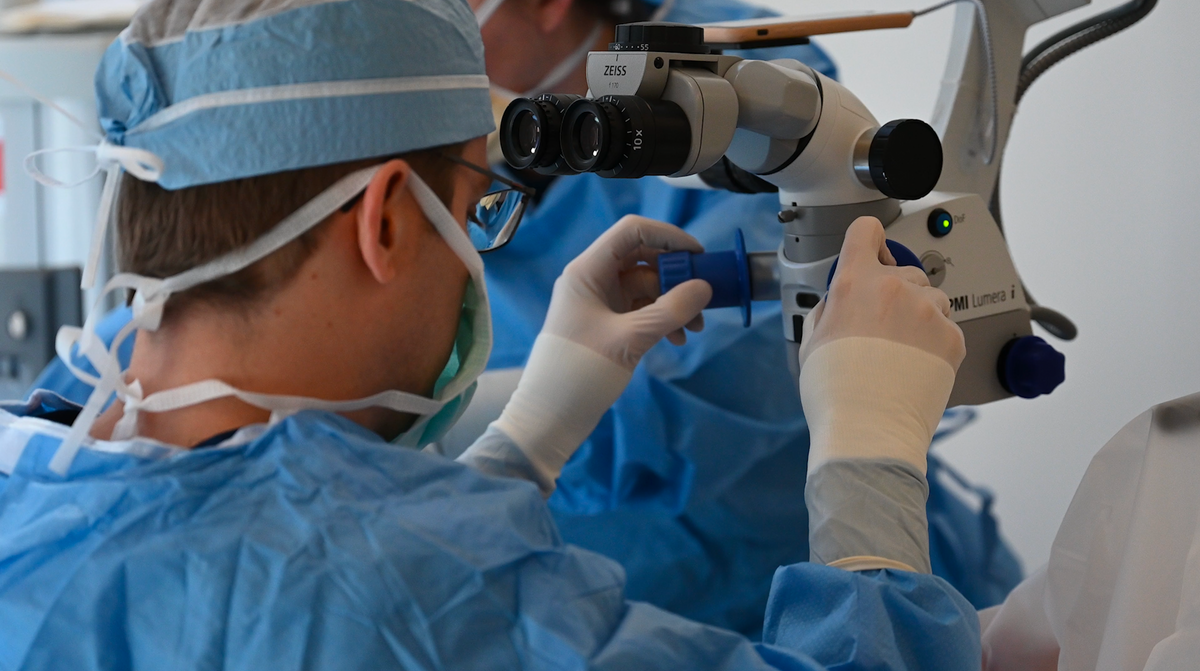
Corneal Marking for Toric IOL Alignment
Corneal marking is a common technique used to establish reference points and identify the intended axis for toric intraocular lens (IOL) alignment.
Because the eye can rotate when a patient moves from an upright position to a supine position, reference marking is typically performed while the patient is seated and looking straight ahead. These marks provide the surgeon with a reference for establishing the intended meridian during cataract surgery.
What is Corneal Marking?
Corneal marking is the process of placing temporary reference marks on the cornea or limbus before surgery.
For toric IOL implantation, these marks can establish a reference axis that helps the surgeon identify and align the intended meridian during the procedure.
Traditional techniques may use a marking pen, bubble marker, pendulum marker, tonometer marker, slit lamp, or other specialized instruments.
The technique varies between surgeons and practices. Some use manual marking methods, while others use image-guided or other digitally assisted systems.
Why Corneal Marking Matters For Toric IOLs
A toric IOL is designed to correct corneal astigmatism at a specific axis. Accurate identification of that axis is therefore an important part of toric IOL surgery.
A conventional manual technique generally involves establishing a reference axis while the patient is upright, transferring that reference intraoperatively, and then marking or identifying the intended axis for IOL alignment.
The goal is straightforward:
Give the surgeon a reliable reference for placing the toric IOL at the intended axis.

How Manual Corneal Marking Works
A traditional manual approach commonly begins with reference marks placed while the patient is seated upright.
The surgeon may establish the horizontal or vertical reference axis using a marking pen or a dedicated marking instrument. During surgery, those reference marks can then be used with a degree gauge or other instrument to identify the intended meridian.
Different techniques and instruments have been developed over the years, including bubble markers, pendulum markers, slit-beam techniques, and other dedicated corneal marking systems.
Manual marking remains an established approach to toric IOL alignment. It is also an area where technique, patient positioning, visibility, and instrument design can affect the marking process.
The Challenges of Manual Marking
Corneal marking is a small step in the surgical workflow, but it requires the surgeon to establish an accurate reference on a moving, living eye.
Published literature describes several considerations with manual marking, including patient positioning, cyclotorsion, parallax, visibility, and the potential for marks to smear or become difficult to identify.
The instruments used for marking also matter.
A marker that obscures the surgeon's view, requires careful positioning, or depends on several separate steps can introduce additional variables into an otherwise simple part of the procedure.
This is where instrument design can make a difference.
A Different Approach to Corneal Marking
RoboMarker was developed around a simple idea:
Make precise corneal marking easier to perform.
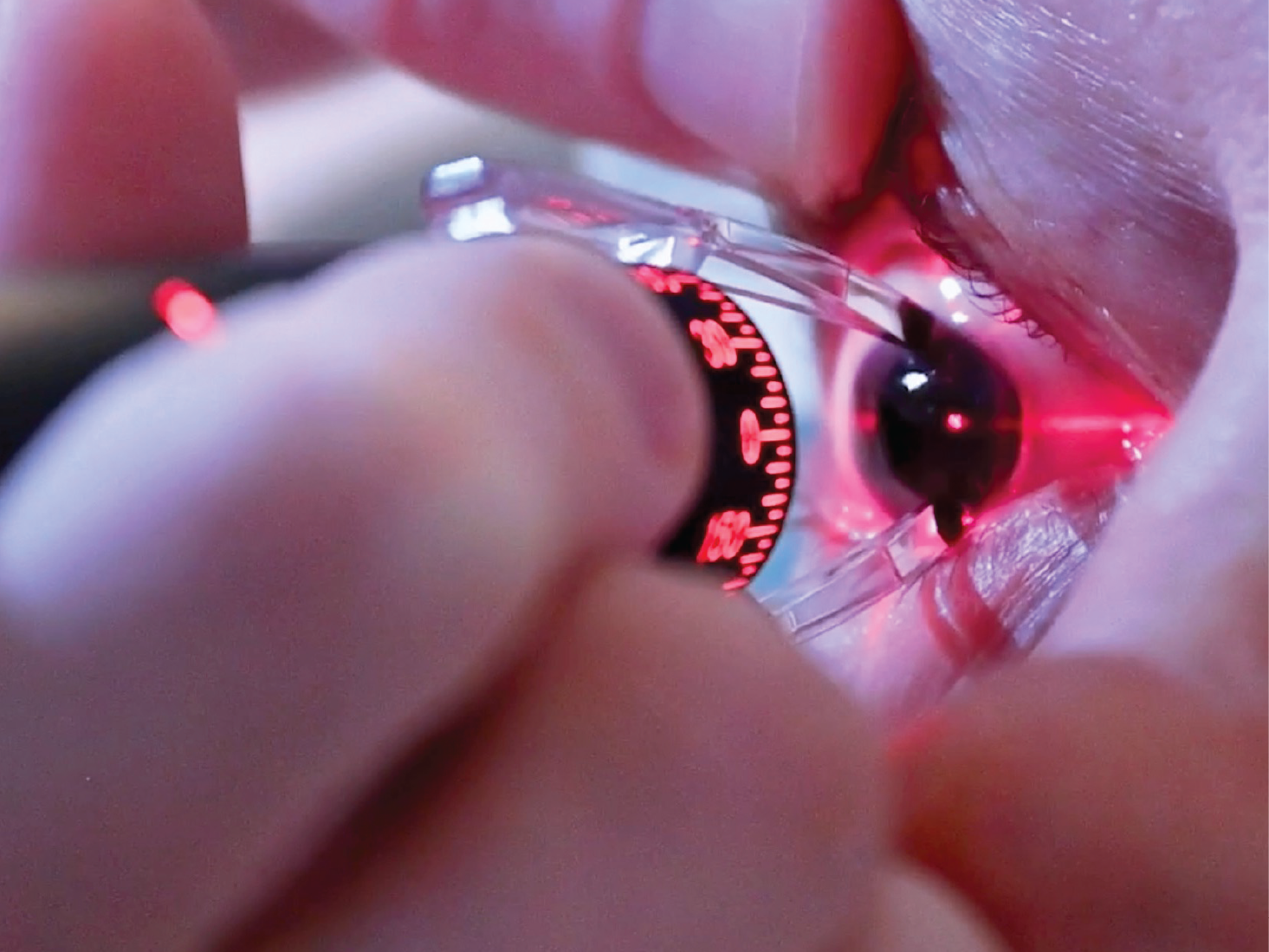
Rather than relying on a conventional fixed marker, RoboMarker uses a self-leveling system and laser guidance to establish the intended reference.
The result is a marking instrument designed to establish a precise reference while keeping the preoperative workflow straightforward.
RoboMarker G2
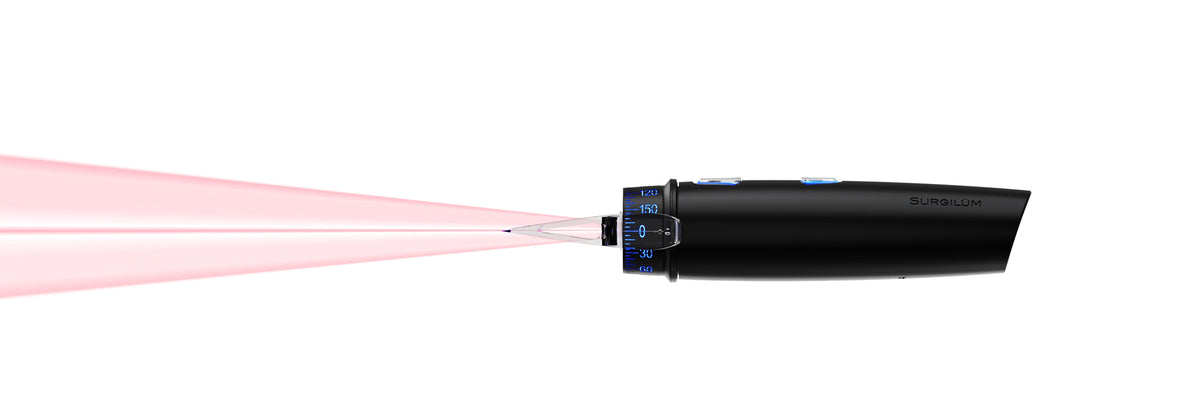
RoboMarker G2 is a handheld corneal marking instrument designed for preoperative use.
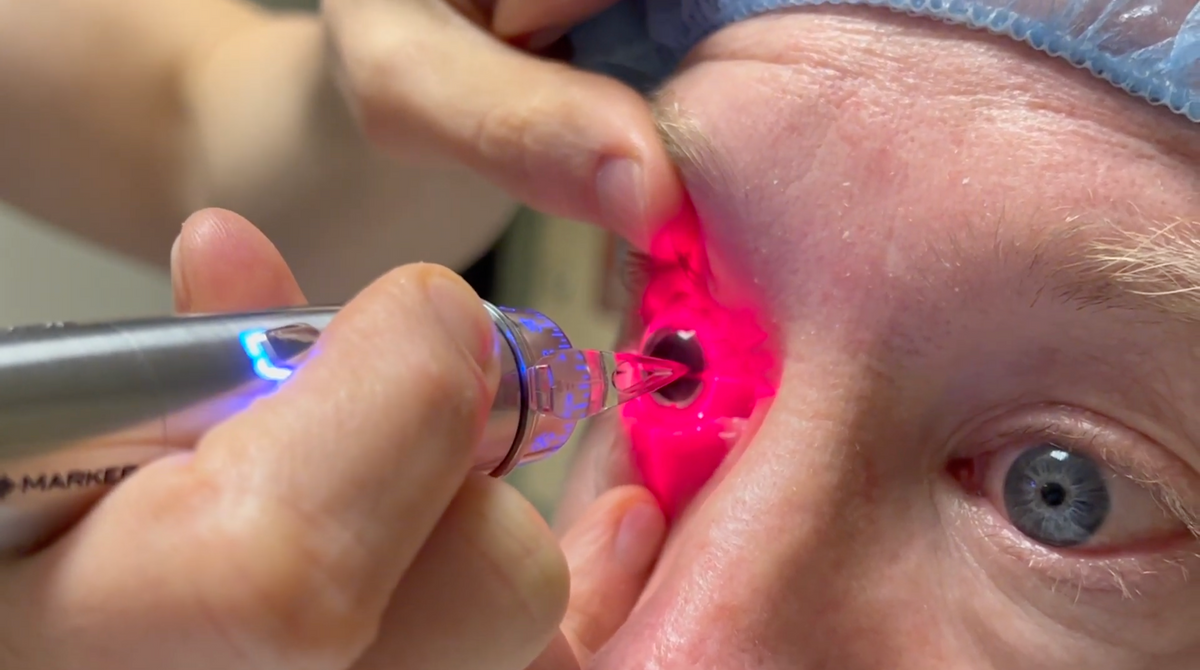
Its self-leveling mechanism and laser guidance are designed to help the surgeon establish a precise reference while maintaining a clear view of the cornea.
RoboMarker G2 is used with pre-sterilized, pre-inked RoboTips. The single-use tip contacts the cornea, while the handle remains outside the sterile field.
The system is designed for use in cataract and refractive procedures where accurate corneal reference marking is part of the surgical plan.
Key features include:
- Laser-guided alignment
- Self-leveling marking mechanism
- 1° precision
- Pre-sterilized, pre-inked single-use RoboTips
- Designed for preoperative corneal marking
- No special calibration required
- Less than 5 minutes to learn
Corneal Marking Questions
Why is the cornea marked before toric IOL surgery?
Corneal reference marks help establish the eye's orientation and provide a reference for identifying the intended axis during toric IOL implantation.
Why is the patient marked while sitting upright?
Changing from an upright to a supine position can cause ocular cyclotorsion. Establishing the reference while the patient is upright helps account for this rotational change.
What instruments can be used for corneal marking?
Manual marking can be performed using a marking pen or dedicated instruments such as bubble markers, pendulum markers, tonometer markers, and other corneal marking systems. Image-guided systems are another approach.
Is manual corneal marking still used?
Yes. Manual marking remains an established method for toric IOL axis identification, alongside image-guided and other marking techniques.
What is a toric IOL marker?
A toric IOL marker can refer to an instrument or system used to establish or identify the axis needed for toric IOL alignment. Depending on the system, marking may be performed on the cornea, limbus, or IOL itself.
What is RoboMarker?
RoboMarker is a self-leveling corneal marking system developed by Surgilūm. RoboMarker G2 uses laser guidance to help the surgeon establish a precise preoperative corneal reference.
Learn More About RoboMarker G2
Corneal marking is a small part of cataract surgery.
It should also be a simple one.
RoboMarker G2––SURGICAL WISDOM. ENGINEERED.